Guided · high-altitude
We are not a
travel agency.
A certified guide leads every step — from the Atlas to Nepal and beyond — on an acclimatisation-first profile with redundant logistics and a permit-to-summit operations desk. We don't guide tourists. We lead expeditions.
★★★★★ 4.9 · 312 mountaineers dispatched · licensed AV.404.AS
The thesis
The end of romantic amateurism.
Most of the industry treats the summit as a lucky outcome. We treat it as an engineered one: the product of preparation, redundancy and honest data, decided months before the trailhead and re-decided every hour on the mountain. We remove the uncertainty that can be removed, and we respect the uncertainty that can't.
If you want a vacation, call a travel agent. If you want the reality of the high mountains, welcome to the team.
The expeditions we run.
Filter by objective and region — small teams, certified guides.
No expeditions match those filters yet.
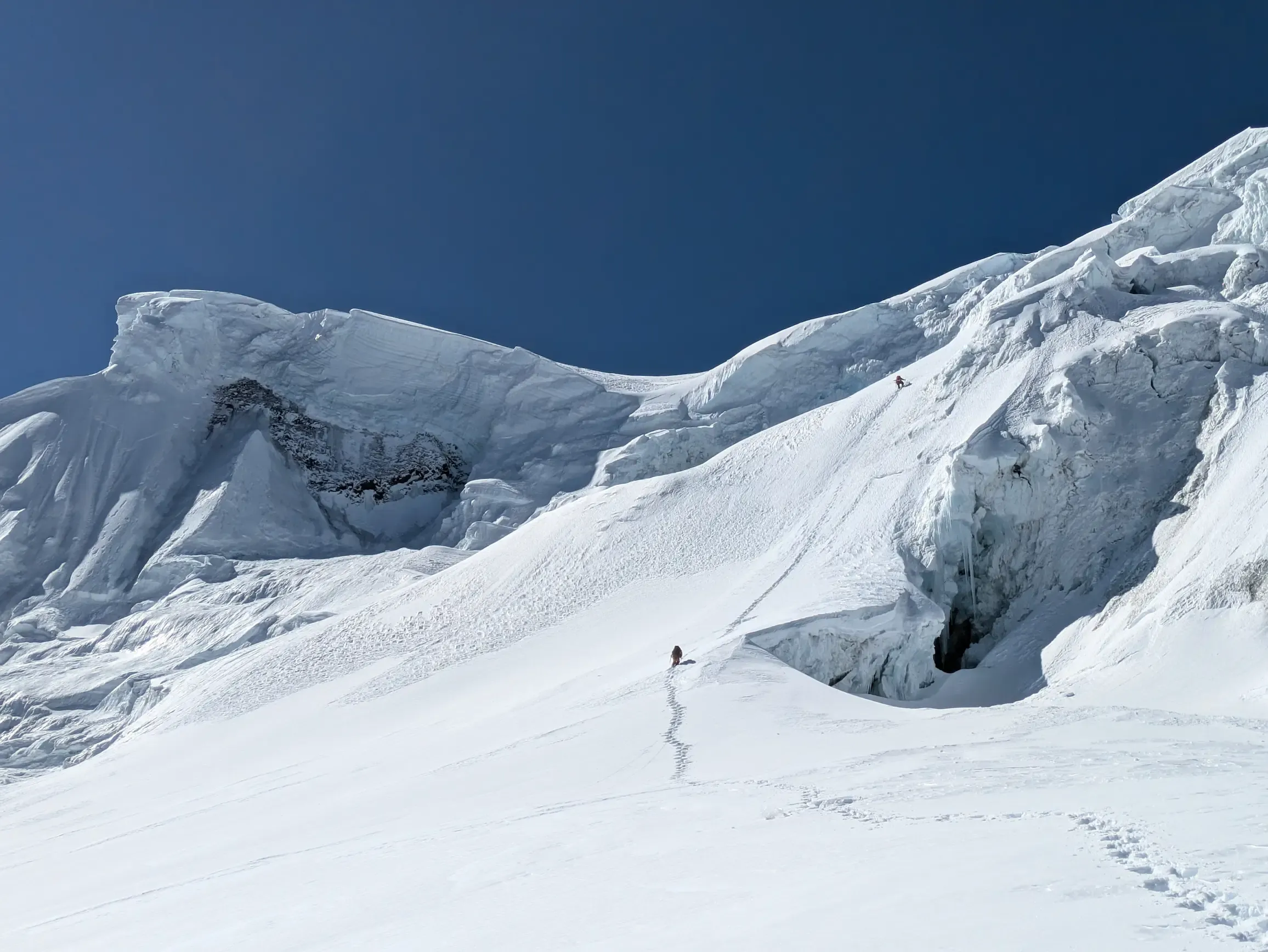
Every step, engineered around you.
Questions we get a lot.
Can't find yours? WhatsApp us →
FAQ_01 Where do we operate?
Guided expeditions run in the High Atlas of Morocco, the Nepal Himalaya, Kilimanjaro in Tanzania and the Patagonia of Chile, with more added by season. If your objective is elsewhere, tell us and we'll say honestly whether it's a project we'll run.
FAQ_02 What kind of expeditions do you do?
Both trekking expeditions — like Everest Base Camp — and peak climbing up to 7,000 m: from a first 4,000 m summit on Toubkal to Mera Peak (6,476 m) and the technical line on Ama Dablam (6,812 m).
FAQ_03 Are the expeditions guided?
Yes. A certified guide leads every day, on an acclimatisation-first profile with redundant logistics and a permit-to-summit operations desk behind you the whole way.
FAQ_04 Open groups with fixed dates, or private?
Both. Open-group departures sit on the calendar with fixed dates — you join a small international rope of other mountaineers on a set itinerary, and it's the most economical way onto a big objective. Private expeditions run on your dates, for you and the people you choose, with the route, pace and logistics built around your team. Tell us which fits and we'll quote it.
FAQ_05 How large are the open groups?
Small by design — a maximum of six mountaineers per open-group departure, plus the guide. A tight ratio keeps the pace honest, the daily checks personal and the decision-making fast on summit day.
FAQ_06 Do I have to carry all my own gear?
No. Porters, mules or pack animals move the common equipment and the heavy loads — tents, group kit, food, duffels — between camps. You walk with a light daily pack: layers, water, snacks and what you need for the day.
FAQ_07 How do the grades work?
Every objective carries a grade so you can weigh it honestly before you commit. Trekking trips — like Everest Base Camp, and our self-guided Pyrenees routes — use a plain 1–5 scale: 1–2 is straightforward walking on good paths, 3 brings long days and real ascent, and 4–5 means sustained altitude or remote terrain with big daily height gain. No technical climbing, but genuine endurance.
Climbing expeditions use the French Alpine System, which rates the hardest part of the route: F (facile) — easy glacier and basic ground; PD (peu difficile) — real snow, ice or rock passages and roped travel; AD (assez difficile) — sustained technical climbing; and D, TD, ED (difficile to extrêmement difficile) — serious, exposed, expert objectives. On our roster Toubkal is F, Mera Peak PD and Ama Dablam TD. A + or − after a grade (PD+, AD−) marks the harder or easier end of it. Tell us your experience and we'll say honestly whether a grade is your right next step.
Operations desk
Request info
Objective: —
Enquiry sent.
Check your inbox — we've sent a confirmation, and the desk has your objective. A real person replies within a day. Prefer to talk now?